
Miso soup was the first Japanese dish I ever learned to make on my own. I remember standing in a tiny kitchen, nervously stirring miso paste into hot broth, unsure if I was doing it right. The scent of seaweed and dashi hit me like a memory I hadn’t lived yet. Warm. Salty. Familiar in a strange way. If you’ve ever craved something comforting but light, this miso soup recipe might be exactly what you didn’t know you needed.
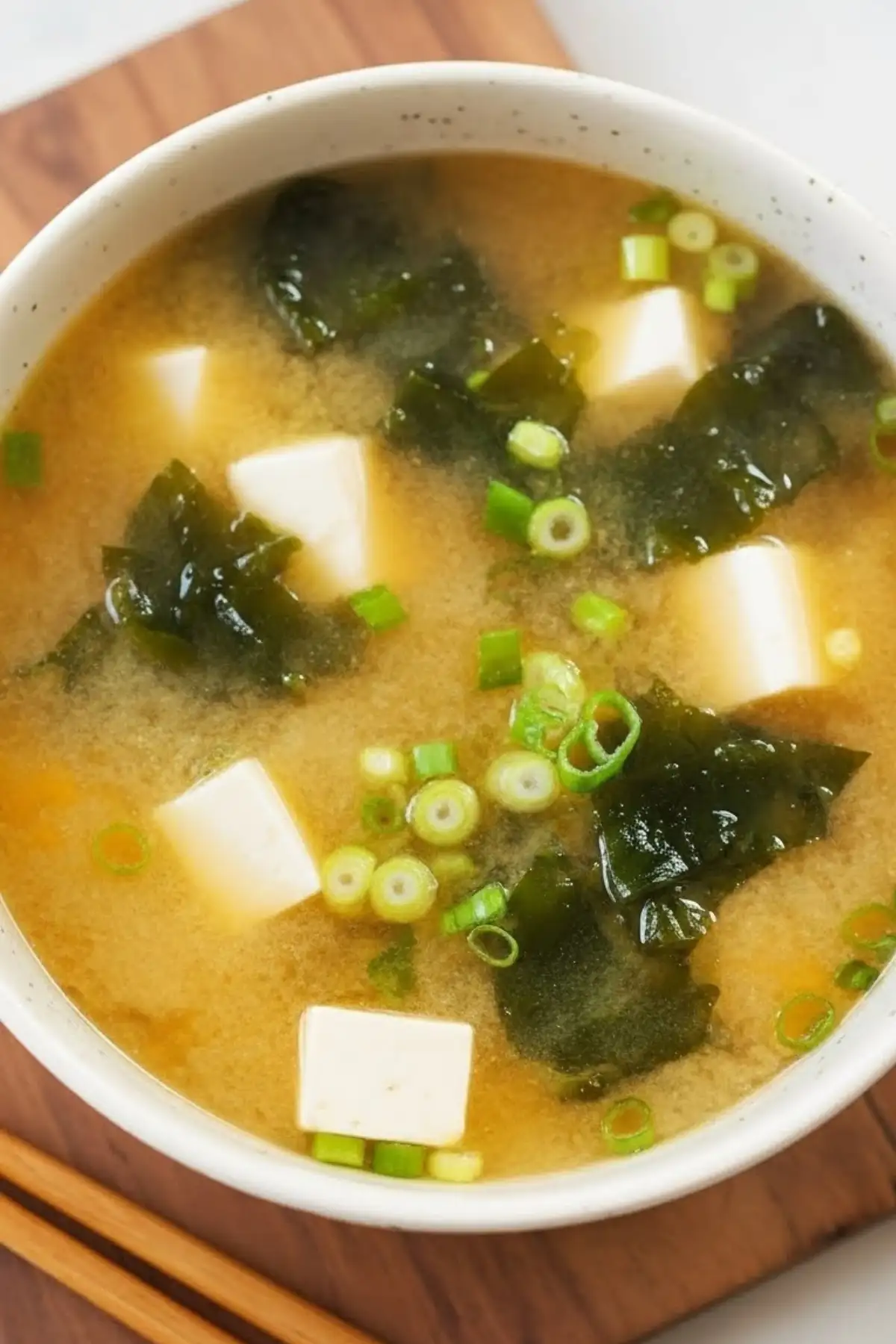
It’s quick. It’s nourishing. It tastes like it came from a cozy Tokyo side street instead of your stovetop. Whether you’re new to Japanese cooking or just need something fast after a long day, this authentic miso soup delivers simple joy in under 10 minutes.
Jump to:
Why You’ll Love This Recipe
- Ready in 10 Minutes: This miso soup recipe is fast enough for any weeknight and doesn’t require fancy techniques or equipment.
- Authentic Taste: Made with real kombu, bonito flakes, and white miso paste for that deep umami flavor you’d expect in a Japanese restaurant.
- Simple Ingredients: You only need a few pantry staples like tofu, seaweed, and scallions to pull this off.
- Low in Calories, Big on Comfort: Light enough to enjoy anytime but satisfying in a way that feels like a warm hug in a bowl.
- Beginner Friendly: If you’ve never cooked Japanese food before, this is the easiest place to start. No stress, just clean, comforting flavor.
- Customizable: Add mushrooms, noodles, or a spicy kick to make it your own without ruining the balance.
Ingredients You'll Need
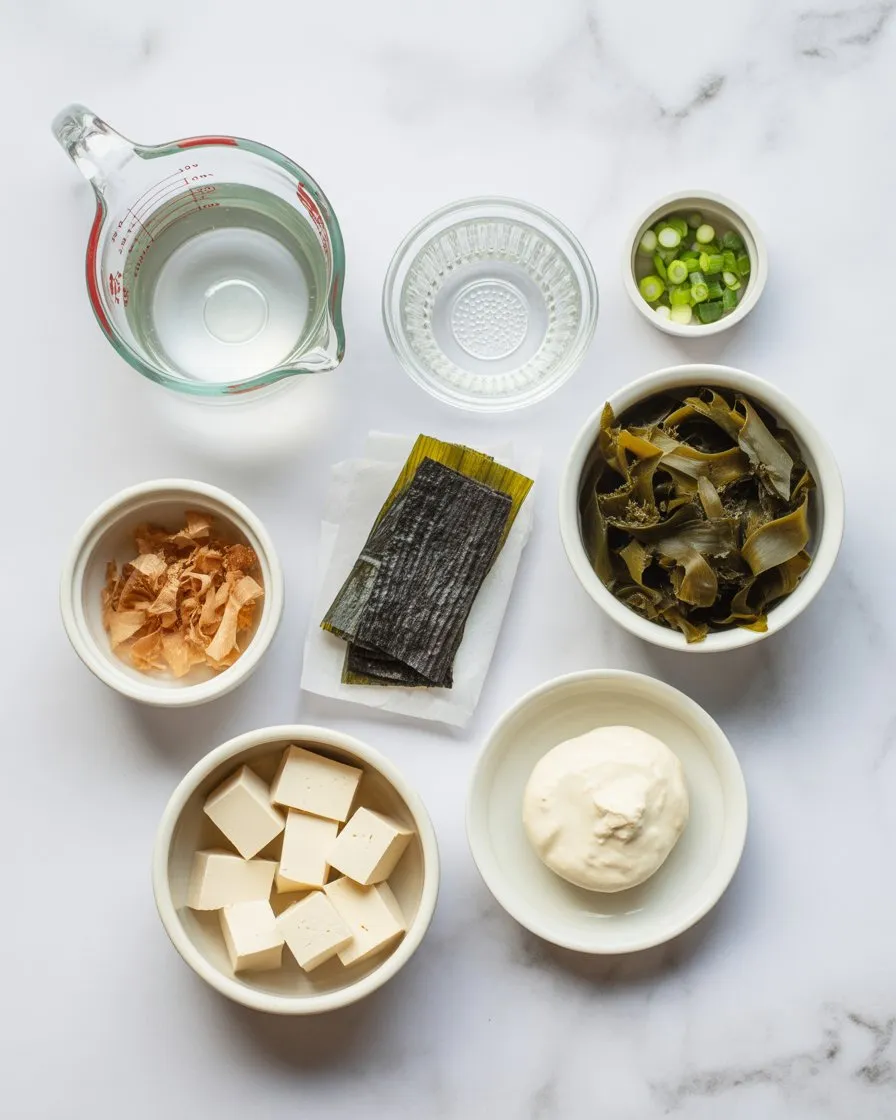
- Water – The base of your broth. You’ll need about 4 cups for two servings.
- Kombu (Dried Kelp) – Adds deep umami to the dashi stock. Rinse it lightly before using.
- Bonito Flakes – These dried fish flakes bring a smoky, savory depth. Skip if making a vegetarian version.
- White Miso Paste – Mild and slightly sweet, this is the heart of the soup. Avoid boiling it to preserve flavor and probiotics.
- Silken Tofu – Soft and delicate, it melts into the broth while keeping a smooth texture. Cut into small cubes for easy spoonfuls.
- Dried Seaweed (Wakame) – Soak briefly in warm water before adding. It expands quickly and adds a soft, briny contrast.
- Chopped Scallions – Used as a topping for a bit of freshness and crunch.
Optional: You can add mushrooms, noodles, or even a poached egg if you want to level it up.
How to Make Miso Soup
Step 1: Make the Dashi Broth
Start by adding 4 cups of water and a piece of kombu to a pot. Heat slowly over medium until just before boiling. Remove the kombu. Add the bonito flakes and simmer gently for 5 minutes. Skim off any foam that rises to the top.
Step 2: Strain and Reheat the Broth
Strain the broth through a fine mesh sieve or cheesecloth. Discard the bonito flakes. Pour the clear dashi back into the pot and bring to a gentle simmer.
Step 3: Add Seaweed and Tofu
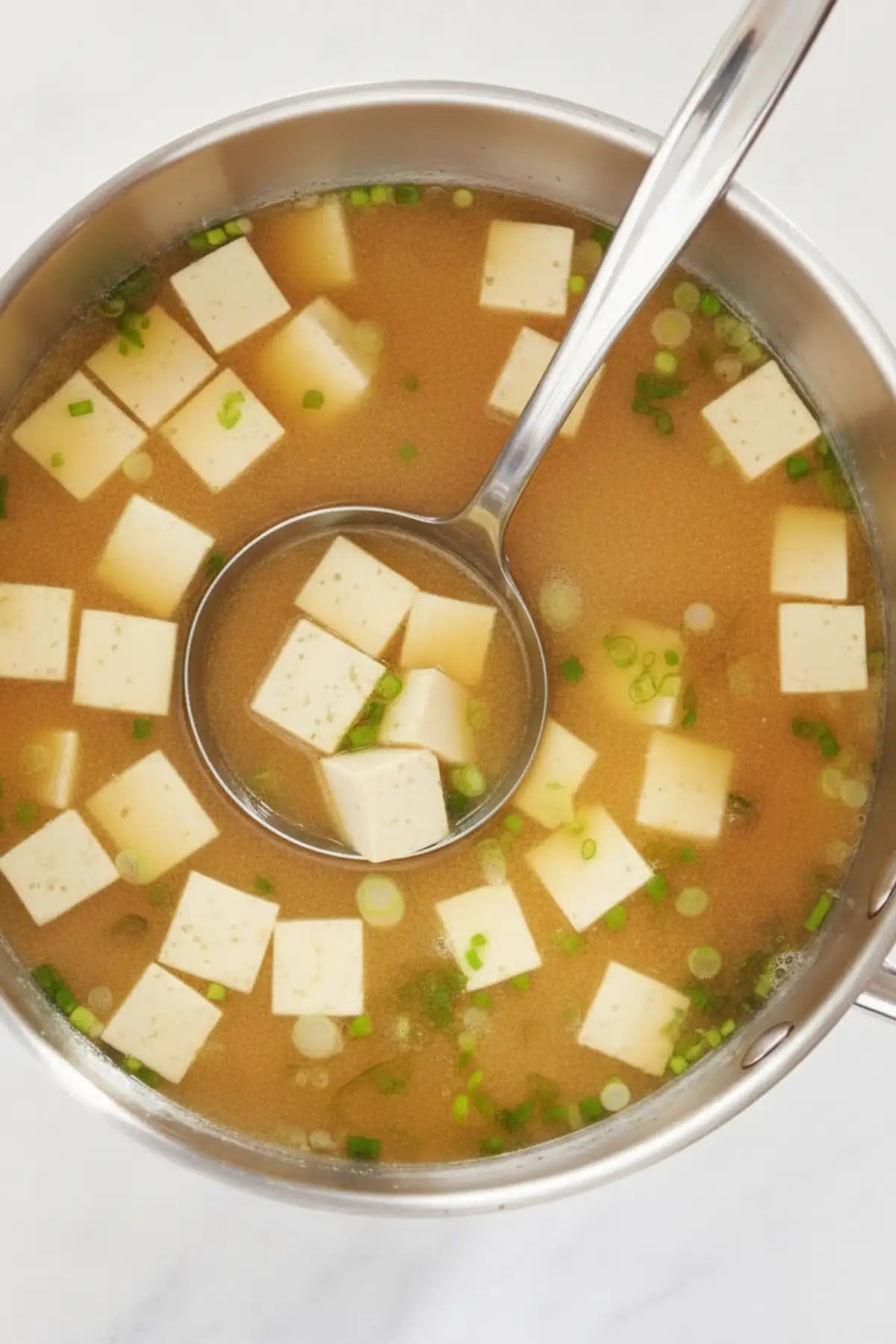
Add soaked, drained seaweed and cubed silken tofu to the hot broth. Let it simmer gently for about 3 minutes. The tofu should be heated through but not broken apart.
Step 4: Stir in the Miso Paste
Turn off the heat. Scoop a few spoonfuls of hot broth into a bowl and whisk in the miso paste until smooth. Then pour this mixture back into the pot and stir gently. Never boil miso paste or it will lose its flavor and nutrients.
Step 5: Top and Serve
Ladle the soup into bowls, sprinkle chopped scallions on top, and serve immediately while it's warm and comforting.
Pro Tips from My Kitchen
✓ Always Remove Kombu Before Boiling – Letting kombu boil too long can make your broth taste bitter or overly strong. Warm it gently and take it out just before the water boils.
✓ Use a Small Whisk or Chopsticks for Miso Paste – Trying to stir miso directly into the pot can leave clumps. Mix it first with a bit of hot broth in a separate bowl until it’s smooth, then add it in.
✓ Choose the Right Tofu – Silken tofu gives the soup a soft, creamy feel. If you prefer a firmer texture, go for medium tofu instead. Just cut it small so it blends nicely with the soup.
✓ Don’t Overdo the Seaweed – Dried seaweed expands a lot more than you think. A small pinch is usually enough for two servings.
✓ Taste Before Serving – Miso paste can vary in saltiness depending on the brand. Taste the broth before serving and adjust with a touch more miso or a splash of soy sauce if needed.
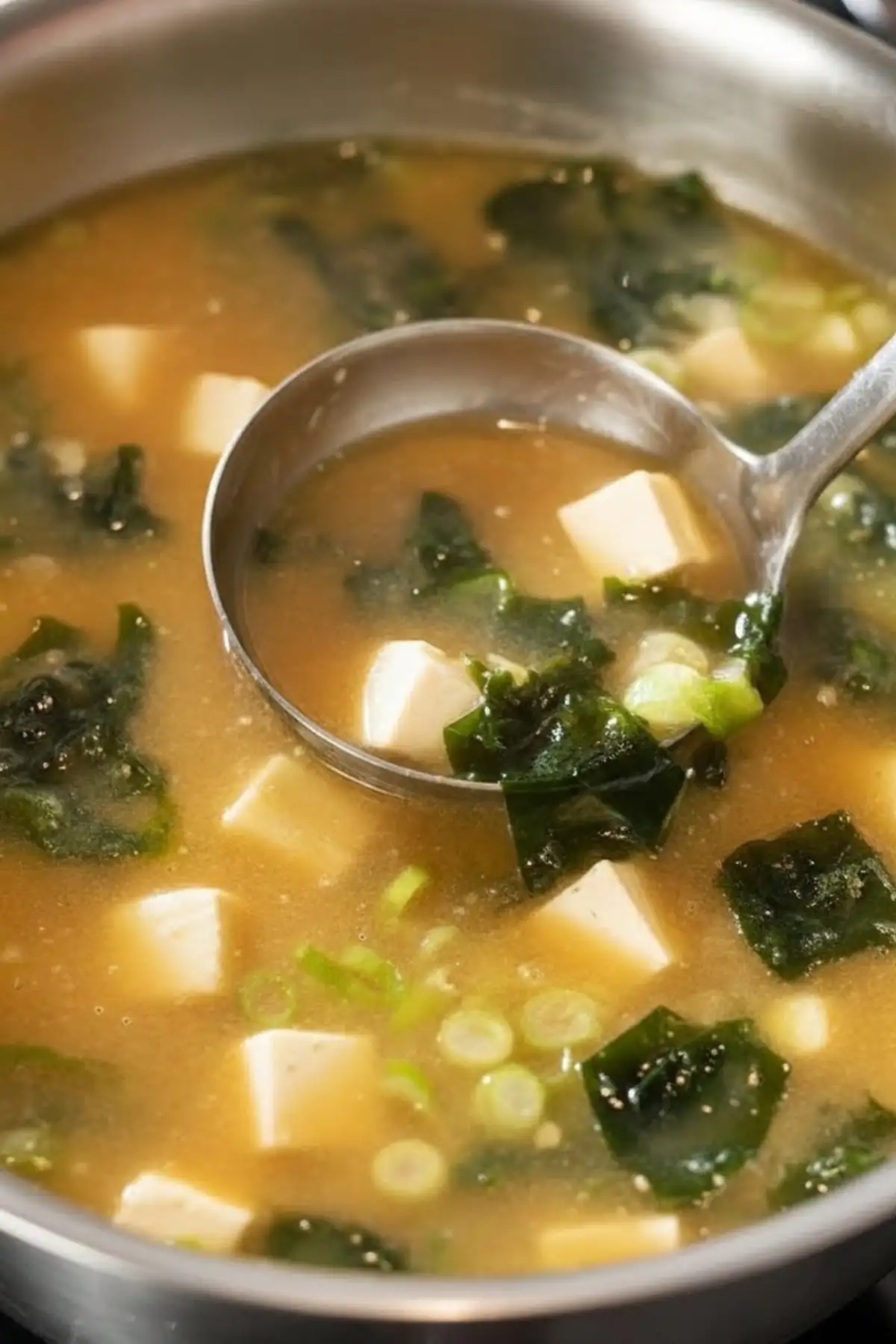
Frequently Asked Questions about Miso Soup
White miso is mild, slightly sweet, and ideal for beginners. Red miso is stronger and saltier. You can experiment, but start with white if you want a more balanced flavor.
Yes. Just skip the bonito flakes and use only kombu to make a vegetarian dashi. You can also add mushrooms like shiitake to give it more depth.
It keeps well for about two days in the fridge. Reheat it gently on the stove, but avoid boiling after the miso is added or the flavor will flatten.
You can freeze the broth and tofu but not the miso paste. Add the miso only after reheating the frozen soup so the taste stays fresh.
Silken tofu is most traditional. It’s soft, creamy, and blends beautifully with the light broth. If you want more texture, medium tofu works too.
Authentic Miso Soup Recipe
Ingredients
- 4 cups water
- 6 inch Japanese kombu (dried kelp), rinsed about 15 cm
- 1 oz bonito flakes, dried and shaved
- 1 oz dried seaweed soaked in warm water and drained
- 4 oz silken tofu cut into small pieces
- 2 ½ to 3 tablespoons white miso paste
- 1 tablespoon scallion chopped
- mushrooms, noodles, or a poached egg optional additions
Instructions
- Make the Dashi BrothAdd 4 cups of water and kombu to a pot. Heat over medium until just before boiling. Remove kombu. Add bonito flakes and simmer for 5 minutes. Skim off any foam.
- Strain and ReheatStrain broth using a fine mesh sieve or cheesecloth. Discard bonito flakes. Return clear broth to pot and bring to a gentle simmer.
- Add Seaweed and TofuAdd soaked seaweed and cubed tofu to broth. Simmer for 3 minutes until tofu is heated through.
- Stir in MisoTurn off heat. Mix a few spoonfuls of hot broth with miso paste in a bowl until smooth, then stir mixture back into the pot. Do not boil miso.
- Top and ServeLadle soup into bowls, top with chopped scallions, and serve immediately.
Notes
- Always remove kombu before the water boils to avoid bitterness.
- Mix miso paste with hot broth in a bowl before adding to avoid clumps.
- Use silken tofu for softness, or medium tofu for a firmer texture.
- A small pinch of seaweed goes a long way – it expands!




Leave a Reply